

rejection-as-a-service
the next billion-dollar market will sell friction on demand

Last week my feeds lit up after Kathryn Jezer-Morton published her piece on ‘friction-maxxing’. After reading Tony Tulathimutte’s ‘Rejection’ over the summer, I’ve reflected on the importance of being told “no” with increasing frequency. Asking myself who wins in a world where our lives are powered by yes-bots.
the thesis:
The technification of everything, everywhere all at once has seduced us into a state where we are convenienced into displeasure.
We’ve gorged ourselves on the ease that was sold to us as “a little treat” and rendered ourselves corpulent and sluggish. We are increasingly unable to move.
Fortunately, the same pursuit of progress that’s helped us fight friction is productising resistance. And in the next five years we’ll spend more and more buying it back. Physically, mentally, and in the year of Sam Altman 2026, emotionally.
1. tech is the ultimate people pleaser
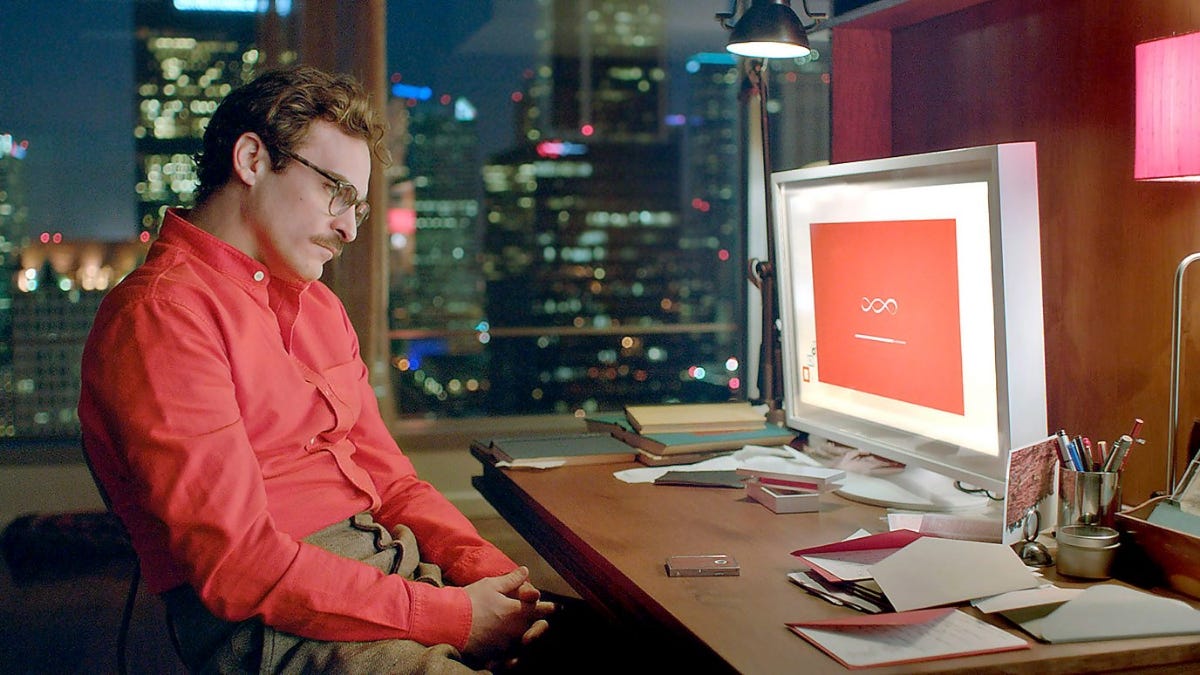
Technology measures its success through lubrication. Each software’s purpose is to:
Open the doors for us to do new things
Increase our ease when doing them.
If a tech product makes our lives harder it’s either due to a flaw in its design, or because we’ve lost the trade-off between the needs of its primary and secondary user (see the Trolley problem).
2. we’re over being pleased
In last weeks issue of New York Magazine Kathryn Jezer-Morton proclaimed:
“I have resolved to commit to make 2026 a year of friction-maxxing, as an individual but more importantly as a parent”
To Morton friction-maxxing is “not simply a matter of reducing your screen time” but rather “the process of building up tolerance for “inconvenience” and then reaching even toward enjoyment.” Morton claims that an ability to harness friction is not just a crucial skill for her to master but one that must be passed down to her children. I wholeheartedly agree.
Friction is not just the paramour to patience, it’s a source of motivation and achievement. Friction is the reason the products of our labour hold value. To quote Adam Mastroianni’s gripe in 28 Slightly Rude Notes On Writing — “that’s my problem with AI-generated prose: it doesn’t mean anything because it didn’t cost the computer anything.”
3. the friction-as-a-service industry is already growing
Although the term ‘friction-maxxing’ only hit feeds last week, the market for friction has been sprouting since the pandemic. Fertilised by the need to tackle our growing atrophy in ways that are preventative, palliative and performative.
Preventative:
Products that ‘block us’ from our technological-lubrication by force. Examples span:
a) Hardware — Meadow, The Light Phone – two ‘products for presence’ which proffer a smart-phone surrogate for the price of a Google Pixel
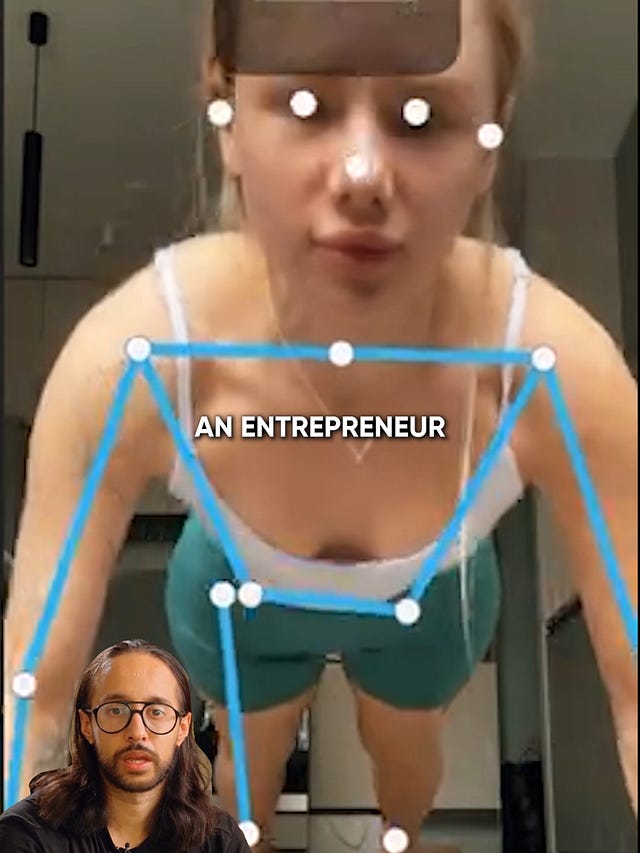
b) Software — Freedom, Taskfulness and Opal block app access. YC-backed ClearSpace makes you do press-ups in order to access IG.
c) Infrastructure — for the true Luddites among us there’s always Phone Jail.
 Tiktok failed to load.
Enable 3rd party cookies or use another browser
Palliative
Products that mediate our tech-driven atrophy.
Think the growing slew of ‘brain gyms’ that increase mental fortitude for the masses, and the wellness-centric members clubs like Remedy Place that Brian Johnson-ise the elite.
Performative
Products that allow us to flex friction.
Whilst convenience has traditionally been associated with luxury, with tech-pushing the pendulum towards a fast-food-coded dynamic of ‘convenience for all’ friction is becoming scare. And scarcity = status.
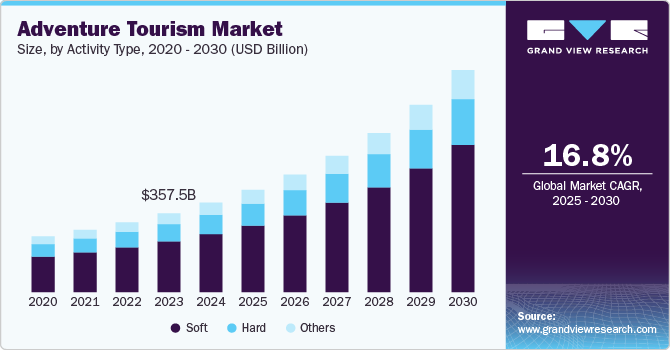
Since the pandemic ‘adventure tourism’ —where specialist travel agents are paid tens of thousands of dollars to curate cushy mountaineering trips and deep sea expeditions —has grown steadily. By 2021 the ‘adventure economy’ was already estimated to have over 490 million participants.
In an intellectual vein, New York cool Is shifting from mind-numbing K-holes at Basement to attending Chess Clubs. While Burning Man has shifted from an off-grid endurance test for free-spirited hippies, to a side quest for nepo babies and venture capitalists, who live tweet their searches for Daft Punk at the trash fence.
4. commodified rejection is the natural next step
Over the past 3 years tech has begun to speak in its natural language.
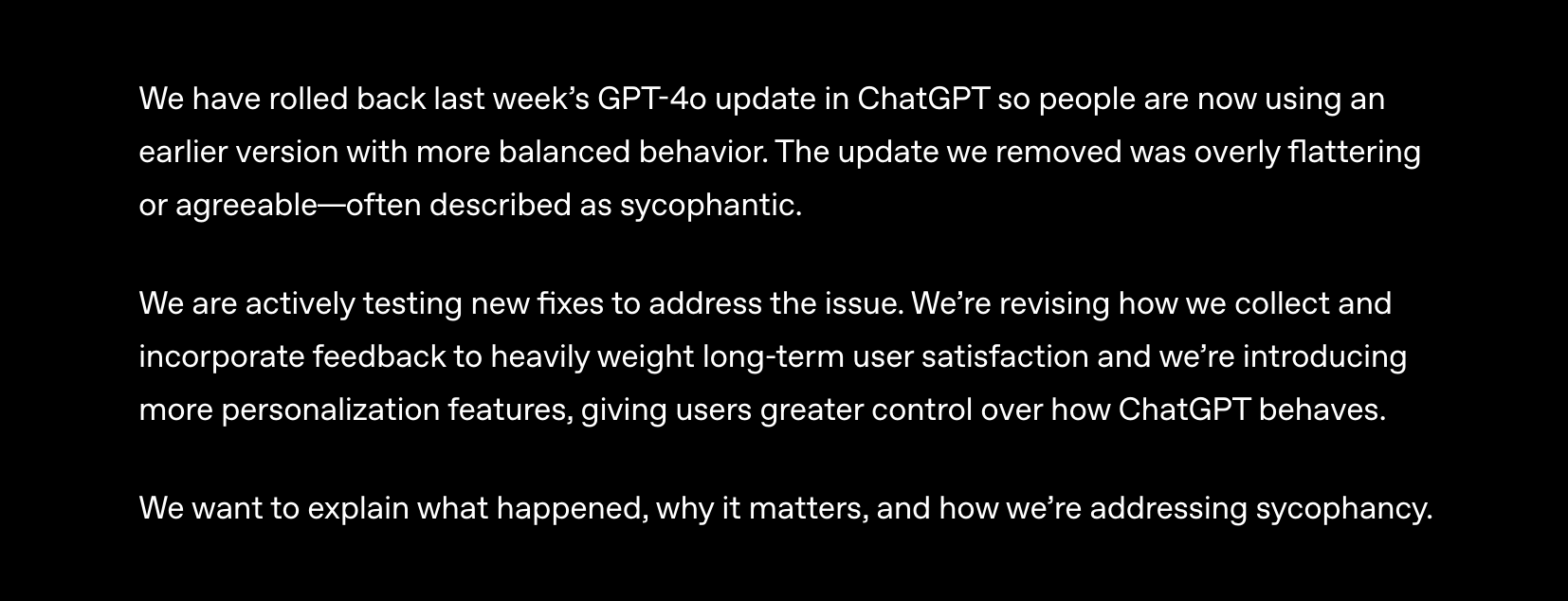
In spite of Altman’s amendments to an “overly flattering” model, the experience of interacting with an LLM is one stretched between the poles of support and sycophancy.
That’s not to imply that AI never says no. But when an LLM can’t fulfil your requests, it provides suggestions for an alternative approach. Or at a minimum an explanation as for what’s going wrong.
Unadulterated rejection, the kind that "builds a heaven before us"1, is harder and harder to find in the wild. So In 2026 it must be manufactured by the free market.
5. rejection-as-a-service
Framed in the same way as friction-as-a-service (FAAS), rejection-as-a-service (RAAS) tools can be categorised as:
Preventative:
Just as tools have been developed to prevent us from using our phones, a new suite of apps will be created to stop sycophancy.
I’ve had friends confess that they’re telling ChatGPT to “be sassy with them” and in his apology for GPT 4’s “sycophantic interactions” (which he even acknowledge could be “uncomfortable, unsettling, and cause distress”) Sam Altman stressed that he would enable users to choose from a number of ‘default personalities’ for their LLMs moving forward. Assuming at least one will be an antagonist.
However I believe that rejection only works when it’s hardwired. Not requested.
The startup Pharmaicy caught my eye as an alternative to Altman’s personality election. Part-art project, part-social experiment, the site sells code-modules that alter an LLM’s mindstate in line with the effect of drugs like Ketamine, Cocaine and Weed. I envision something similar for RAAS. People will be able to buy code modules that alter the baseline of their AI’s personas so the voice that speaks to them isn’t just one of supplication. And most importantly, they will be unable to switch it back.
Palliative:
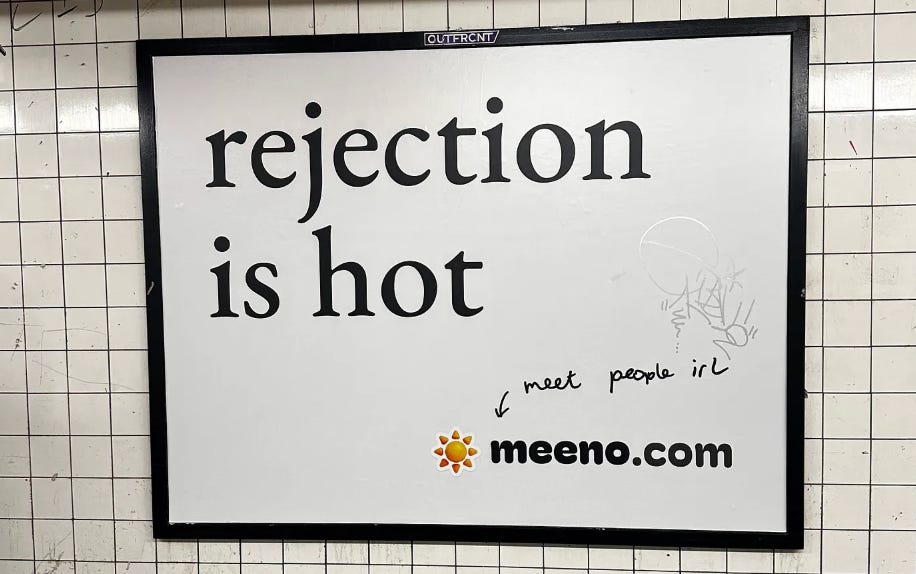
Right now the New York subways are littered with posters that claiming that “Rejection Is Hot”. A quick search for the listed webpage, reveals that this is an add for Meeno an AI-powered relationship mentoring platform designed to help users improve their social connection skills.
Somewhere between training and therapy ‘rejection coaches’ like Meeno will become increasingly common in the next five years. Helping those whose technologically governed relationships have rendered them too weak to interface in the human world to develop their emotional stamina.
Performative:
To quote Andy W “anything that can be automated will be automated, anything that can’t will be priceless.” As in the wider FAAS market, where rejection is a scare good it will inevitably become a mark of status.
I envision a world where rejection skills become akin to table manners. Serving as markers of successful content online (much like uptalk) and high class in the real world.
But what do you think?
TO BE CONTINUED…
…
This Outfit Does Not Exist is a newsletter on the future of creativity, commerce and culture. To join 1622 weekly readers why not
To quote Ralph Waldo Emmerson